
2026-03-26

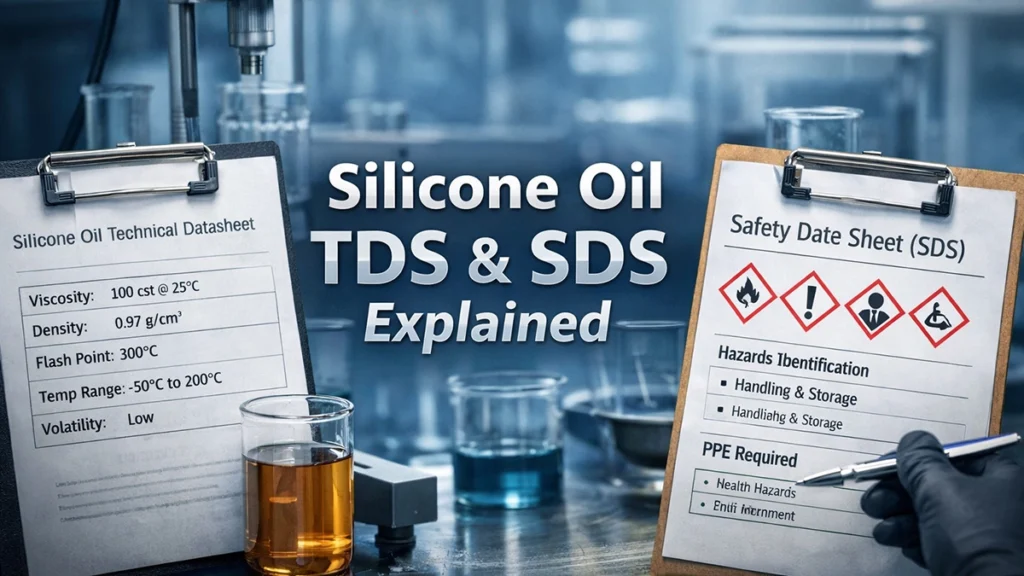
For professional buyers, engineers, and technical procurement teams, selecting silicone oil is far more complex than simply choosing a viscosity grade. A reliable decision depends on accurately interpreting two essential technical documents: the Silicone Oil Technical Datasheet (TDS) and the Silicone Oil Safety Data Sheet (SDS).
Reputable manufacturers such as Silico® provide both documents to help buyers evaluate PDMS silicone oil performance, understand industrial silicone oil safety requirements, and ensure regulatory compliance throughout the product lifecycle.
Silicone oil—often referred to as PDMS silicone fluid (Polydimethylsiloxane) —is widely used in lubrication systems, damping devices, heat transfer units, and electronic components due to its thermal stability, chemical inertness, and predictable viscosity–temperature behavior.
However, these advantages only translate into real-world performance when the oil is correctly selected and managed. This is why experienced buyers always request both the silicone oil TDS and silicone oil SDS before approving a product. The TDS supports engineering evaluation, while the SDS ensures safe handling, transport, and storage in compliance with international regulations.
Although often requested together, the TDS and SDS answer very different questions.
The Silicone Oil Technical Datasheet (TDS) explains how the product performs. It provides typical physical and chemical properties used to assess application suitability, such as viscosity grade, density, flash point, volatility, and operating temperature range.
The Silicone Oil Safety Data Sheet (SDS) explains how the product should be handled safely. It is prepared in accordance with GHS and other global chemical safety standards and focuses on hazard identification, personal protection, storage conditions, and emergency measures.
In professional procurement practice:SDS supports workplace safety and regulatory compliance
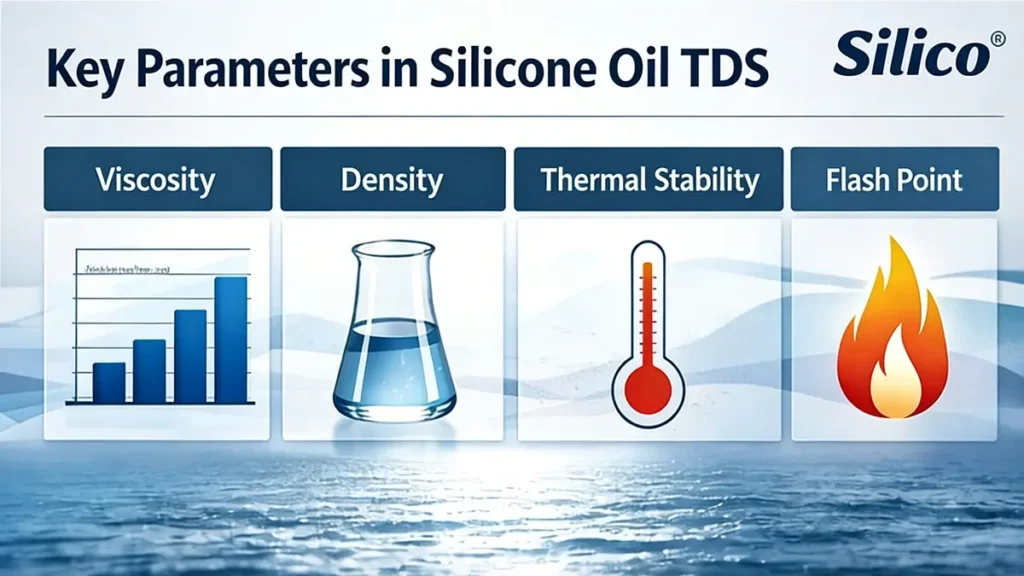
Viscosity, usually stated in centistokes (cSt) at 25 °C, is the most frequently referenced parameter in a silicone oil technical datasheet. However, professional buyers understand that PDMS silicone oil viscosity selection requires more than reading a single value.
A proper evaluation considers:Flash point data in the TDS helps buyers determine safe operating margins. Silicone oils are widely chosen for high-temperature industrial applications because of their excellent thermal stability and resistance to oxidation.
Evaluating flash point alongside actual operating conditions helps prevent degradation, vapor formation, and unnecessary safety risks.Low volatility is a defining advantage of high-quality silicone oils. Reduced evaporation minimizes viscosity drift, residue formation, and maintenance frequency—key benefits in sealed systems and continuous industrial processes.
In this section, experienced buyers often compare data from multiple suppliers, including established brands such as Silico®, to ensure long-term consistency rather than short-term performance only.
Storage in sealed containers away from strong oxidizing agents
The SDS also outlines spill response procedures and disposal methods in accordance with local environmental regulations. While silicone oils are chemically stable, responsible disposal remains a core compliance requirement for industrial users.
Evaluating a silicone oil TDS or SDS in isolation can lead to incomplete conclusions. Professional buyers integrate both documents to ensure:
Compliance with occupational health and environmental standards
This combined approach reduces operational risk and supports long-term system reliability.
Common mistakes include:
Ignoring viscosity behavior under actual operating temperatures
Avoiding these misunderstandings is critical for effective industrial silicone oil selection.
While essential, TDS and SDS are only part of a broader evaluation framework. Experienced buyers often combine them with:
Comparative analysis between silicone oil and alternative fluids
Within a structured technical knowledge system, TDS and SDS provide the foundation for informed and defensible purchasing decisions.

Understanding how to interpret Silicone Oil Technical Datasheets (TDS) and Safety Data Sheets (SDS) is a core competency for professional buyers and engineers. These documents clarify performance expectations, safety responsibilities, and regulatory obligations.
Before finalizing any purchase, always request the latest TDS and SDS from reputable suppliers such as Silico®, and evaluate the information carefully in the context of your specific application and operating conditions.