2026-03-26

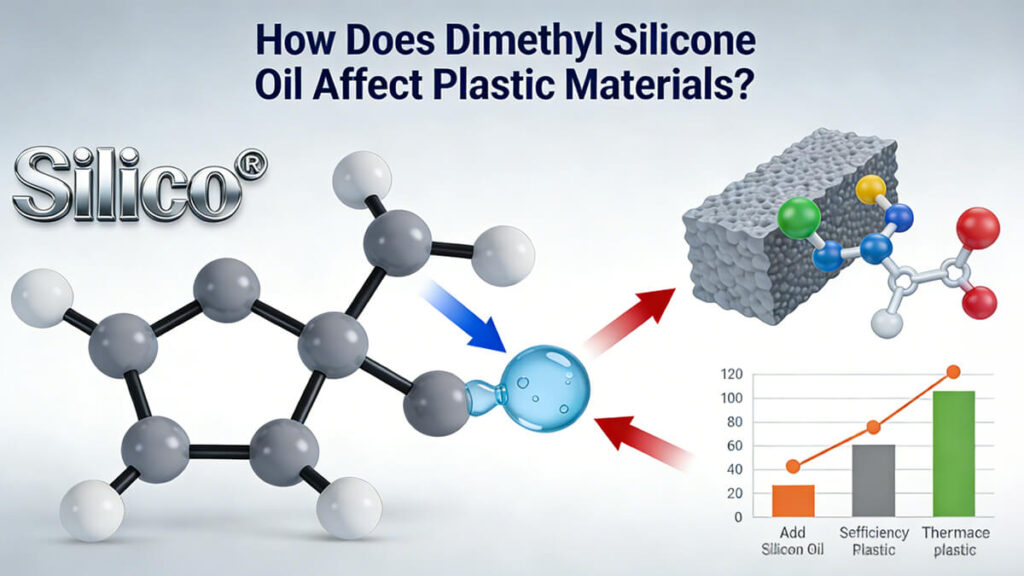
In modern polymer engineering, dimethyl silicone oil (polydimethylsiloxane, PDMS) plays a critical role as a plastic processing aid and surface modification additive. It is widely used to improve melt flow behavior, reduce internal friction, and enhance the surface quality of thermoplastic materials.
As manufacturers pursue higher productivity, better surface aesthetics, and longer product life cycles, understanding how dimethyl silicone oil affects plastic materials during processing and in final applications has become increasingly important.
At the formulation level, high-purity silicone fluids supplied by professional manufacturers such as Silico® are often selected for their stable viscosity control, consistent molecular structure, and predictable performance across different polymer systems.
Dimethyl silicone oil is a linear silicone polymer consisting of repeating siloxane (Si–O) units with methyl side groups. This molecular structure gives PDMS several properties that are particularly valuable in plastic processing applications:
Strong lubricating and slip behavior
Because of these characteristics, PDMS is commonly used as a silicone oil additive for plastics, available in multiple viscosity grades to match different extrusion, injection molding, and compounding requirements.
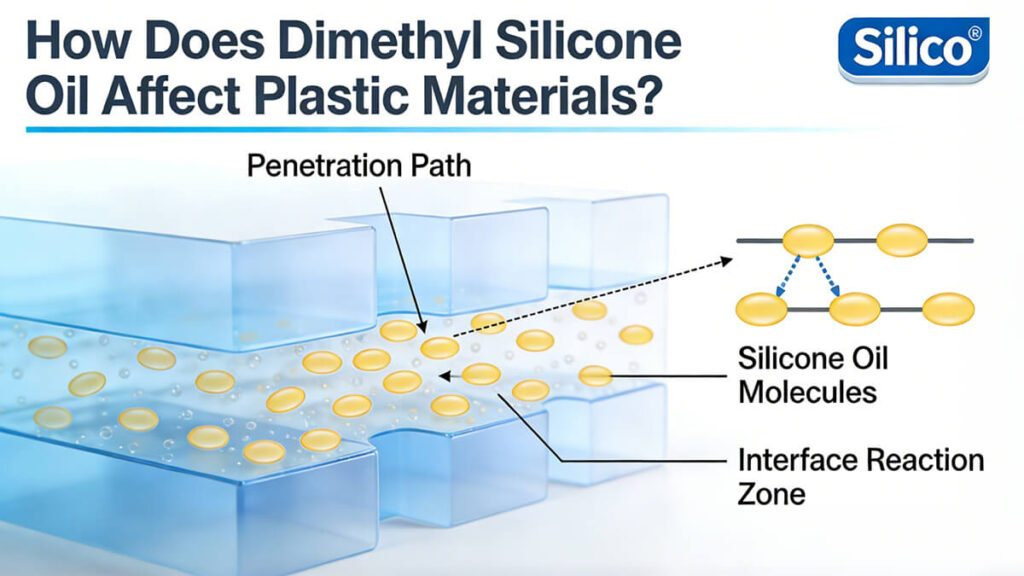
The dominant interaction mechanism between dimethyl silicone oil and plastic materials is physical rather than chemical. PDMS forms a microscopic lubricating layer within the polymer melt, reducing friction between molecular chains and between the melt and processing equipment.
This internal lubrication effect improves polymer chain mobility, allowing plastic melts to flow more easily under shear stress. As a result, PDMS is frequently described in technical literature as an internal lubricant and processing aid for thermoplastics.
Due to its low surface energy, dimethyl silicone oil naturally migrates toward polymer surfaces during cooling. This migration alters surface characteristics by:
Improving gloss and smoothness
These surface effects are particularly important in applications where plastic surface appearance, slip behavior, or tactile feel directly affect product value.
One of the most practical benefits of adding dimethyl silicone oil to plastics is the reduction of melt viscosity. Improved flow behavior enables:
Lower processing temperatures and injection pressures
In extrusion and injection molding operations, PDMS is often used to optimize melt flow index control and stabilize processing windows, especially for high-speed or thin-wall applications.
By lowering friction inside the polymer melt, silicone oil additives reduce screw torque and mechanical load on processing equipment. This leads to:
More stable long-term production
For high-output plastic manufacturers, this internal lubrication effect directly translates into improved processing efficiency and lower operational costs.
Dimethyl silicone oil significantly improves the surface quality of plastic products, even at low addition levels. Finished parts typically exhibit:
Pleasant, low-friction tactile feel
These properties are highly valued in consumer plastics, packaging films, and decorative plastic components.
The formation of a silicone-rich surface layer provides a lubricious barrier that helps reduce abrasion damage. As a result, PDMS-modified plastics often show improved scratch resistance and surface durability, extending the visual life of the product.
In outdoor or long-term use applications, silicone oil additives can contribute to improved weather resistance and UV stability. By limiting surface degradation and moisture interaction, PDMS helps maintain mechanical and aesthetic properties over time.
In mid-to-high-end formulations, manufacturers increasingly rely on controlled-migration silicone oils, such as those developed by Silico®, to balance surface protection with long-term stability.
While low concentrations of dimethyl silicone oil may slightly enhance impact resistance by improving local flexibility, excessive levels can negatively affect tensile strength or stiffness. Therefore, dosage optimization and compatibility testing are essential during formulation development.
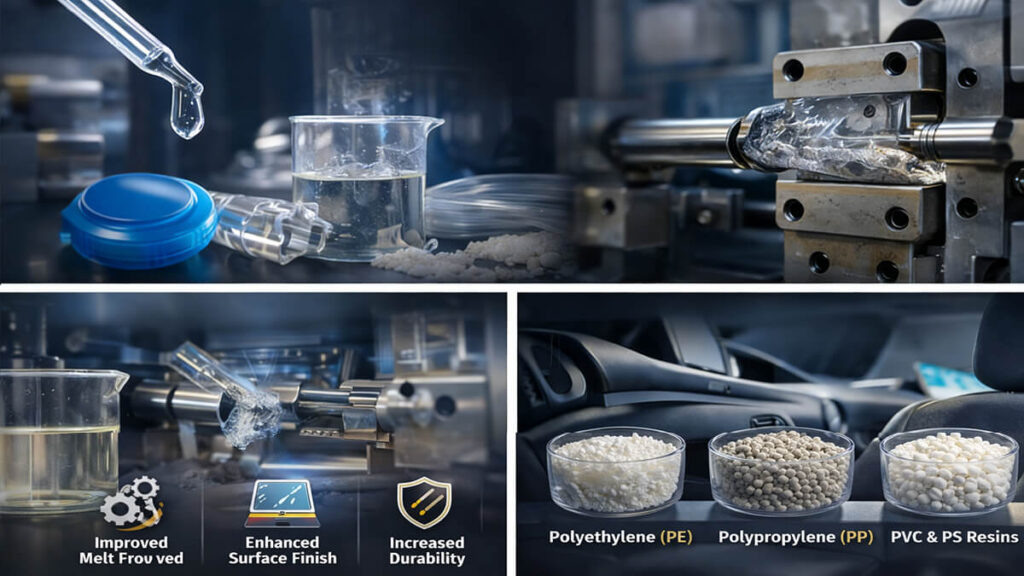
In PE films and molded parts, PDMS improves melt flow, reduces processing friction, and enhances surface gloss, making it ideal for packaging and industrial films.
In PP applications, silicone oil improves flowability and scratch resistance, particularly in automotive interior parts and household products.
PDMS functions mainly as a processing lubricant in PVC systems, reducing internal friction and improving mold release, though compatibility testing is critical.
For brittle polymers like PS, carefully controlled silicone oil addition can improve processing behavior and impact resistance without compromising rigidity.
Across the plastics industry, dimethyl silicone oil is widely used as:
Additives for improving weatherability and long-term durability
These applications make PDMS a core component in modern plastic additive systems, especially where surface performance and processing stability are critical.

Despite its versatility, dimethyl silicone oil must be used carefully:
Selecting high-quality, well-characterized silicone oils and performing application-specific testing are essential steps in successful implementation.
Dimethyl silicone oil plays a multidimensional role in plastic materials, improving processing efficiency, surface quality, and long-term performance when properly formulated. Its effectiveness depends on viscosity selection, compatibility with the base polymer, and controlled dosage.
For manufacturers seeking consistent quality and predictable performance, partnering with experienced silicone material suppliers such as Silico® helps ensure stable formulations and reliable industrial results in advanced plastic processing applications.