
2026-03-26

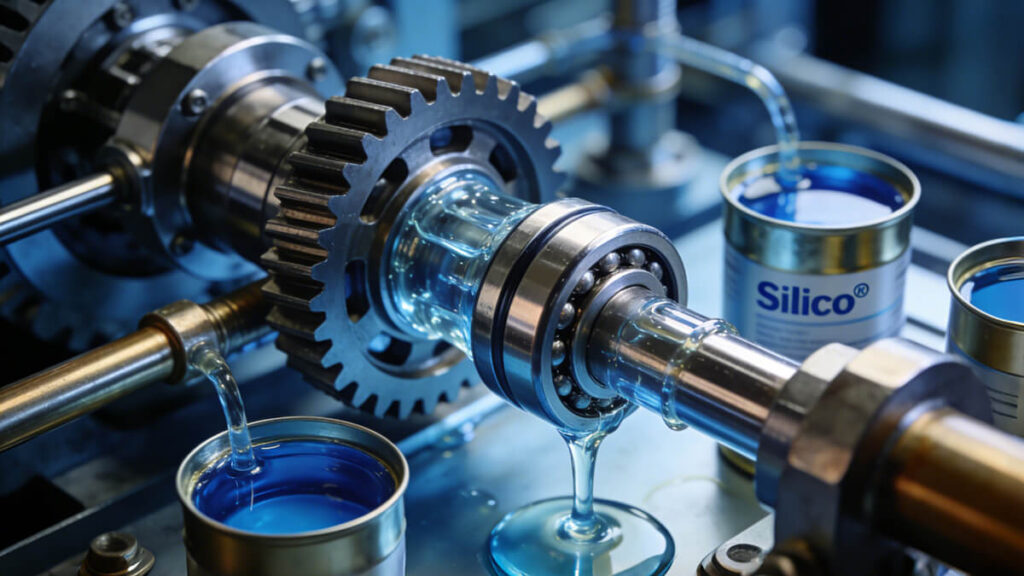
High-performance industrial lubrication increasingly relies on advanced silicone oil technologies as modern equipment operates under higher loads, wider temperature ranges, and longer service intervals. In industrial lubrication systems, lubricant selection directly impacts equipment reliability, service life, energy efficiency, and maintenance costs.
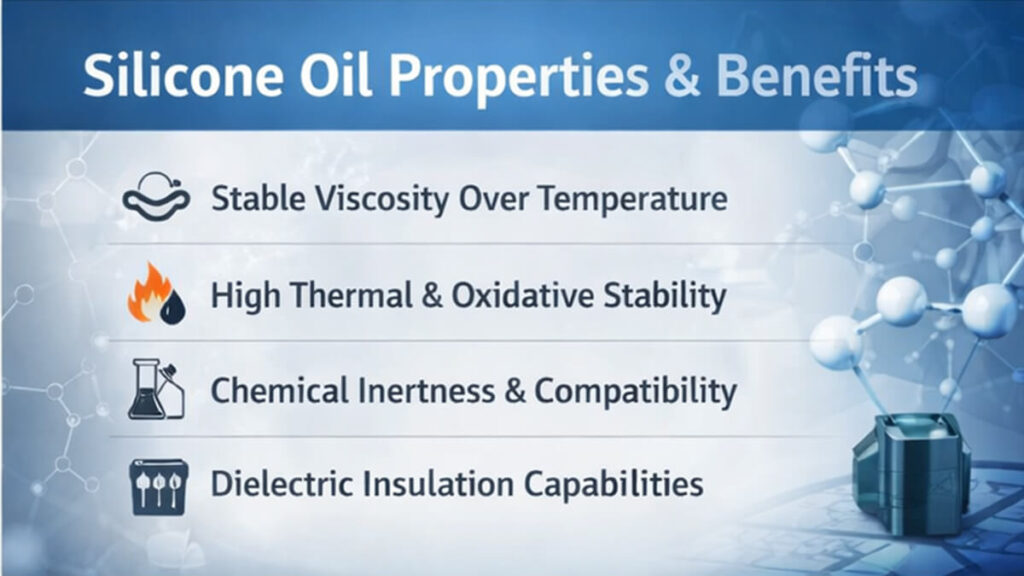
Compared with conventional mineral oils, silicone oil for industrial lubrication offers superior thermal stability, chemical inertness, low volatility, and stable viscosity performance under demanding operating conditions. These properties make silicone oil well suited for rotating machinery, precision components, electrical insulation, and vibration-damping applications where traditional lubricants may fail.
As a professional supplier of organosilicon materials, Silico® provides high-performance silicone oil solutions designed for demanding mechanical and thermal environments. Optimal performance depends on selecting the appropriate silicone oil grade based on viscosity, operating temperature, material compatibility, and specific application requirements.
Silicone oil is a synthetic fluid primarily composed of polydimethylsiloxane (PDMS) or chemically modified polysiloxanes. Its defining feature is the silicon–oxygen (Si–O) backbone, which provides significantly higher bond energy and stability than carbon-based oils.
This molecular structure delivers several critical industrial advantages:
Chemical inertness toward metals and most engineering materials
As a result, PDMS silicone oil is widely used as an industrial lubricant, damping fluid, dielectric liquid, and heat transfer medium in mechanical and electromechanical systems.
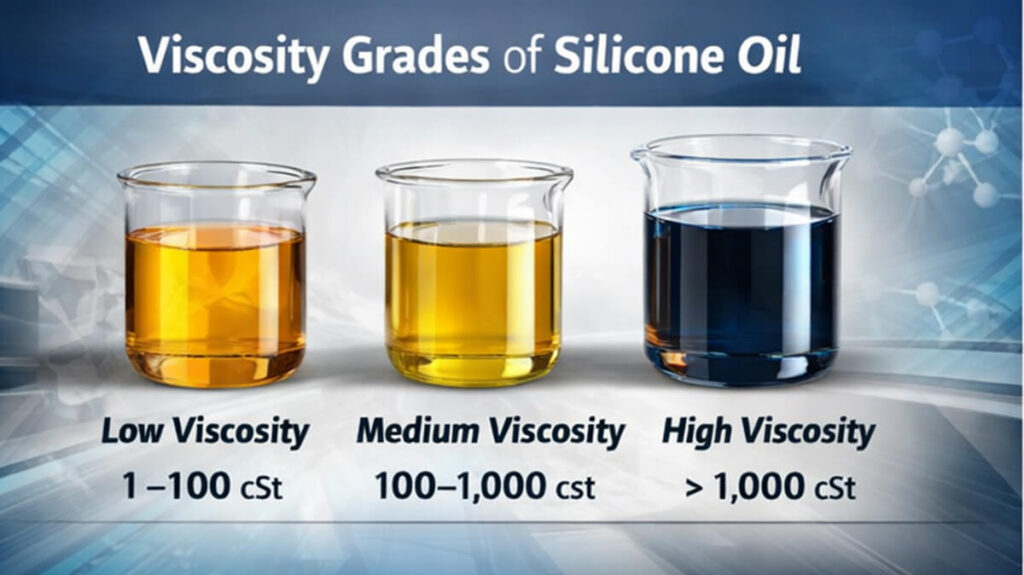
Viscosity is the most influential parameter when selecting silicone oil for mechanical systems. It determines lubricating film thickness, friction reduction, load-carrying capacity, and overall system efficiency.
Silicone oils are classified by kinematic viscosity (cSt at 25 °C):
High-viscosity silicone oil (>1,000 cSt)
Ideal for vibration damping, shock absorption, high-load lubrication, and precision motion control.
A key advantage of silicone oil is its low viscosity–temperature coefficient, allowing it to maintain consistent performance during cold starts and high-temperature operation.
In high-temperature industrial environments, lubricant degradation is a leading cause of mechanical failure. High-temperature silicone oil offers superior resistance to thermal breakdown and oxidation compared to mineral oils.
Standard PDMS silicone oils perform reliably above 200 °C, while phenyl-modified silicone oils provide enhanced thermal and oxidative stability for prolonged exposure to extreme heat and shear stress.
Many engineering plastics
However, certain elastomers and seal materials may swell if compatibility is not evaluated. Selecting the correct grade—or a modified silicone oil—helps prevent seal degradation, leakage, and premature system failure.
Dielectric silicone oil combines lubrication, electrical insulation, and thermal management in a single fluid. Its low dielectric constant, high breakdown strength, and thermal stability make it suitable for transformers, capacitors, and electromechanical assemblies.
For systems requiring both mechanical reliability and electrical safety, silicone oil provides a multifunctional solution with long-term stability.
Start with a clear definition of:
Continuous vs intermittent operation
Accurate operating data is essential for correct lubricant selection.
Match viscosity to mechanical requirements:
High viscosity for damping, shock absorption, and heavy loads
Incorrect viscosity selection can lead to excessive wear or unnecessary energy loss.
Ensure the selected silicone oil maintains stability at maximum operating temperatures while remaining fluid at minimum temperatures. This balance is essential for long-term reliability.
Evaluate interactions with seals, gaskets, plastics, and coatings. Compatibility testing or supplier consultation is strongly recommended for critical systems.
For demanding applications, modified silicone oils—such as phenyl silicone oils or hybrid formulations—offer improved heat resistance, oxidation stability, and material compatibility.
At this stage, working with experienced suppliers such as Silico® can help match specific industrial requirements with appropriate silicone oil formulations.
Vibration damping: High-viscosity silicone damping oils for smooth, predictable resistance
Document performance data for maintenance optimization
Overlooking elastomer and seal compatibility
A structured, data-driven selection process minimizes failure risk and lifecycle cost.
Selecting the right silicone oil for industrial lubrication and mechanical systems requires careful evaluation of viscosity behavior, temperature stability, chemical compatibility, and application demands. When properly specified, silicone oil delivers long-term reliability, reduced maintenance, and consistent performance across diverse industrial environments.
With a well-defined selection strategy—and support from experienced suppliers like Silico®—silicone oil becomes a high-value component rather than a routine consumable.